


Postpartum Skin Crash: Why Your Face Suddenly Feels “Off”
What Happens to Your Glow in the 4th Trimester?
The “pregnancy glow” is real and it’s not just lighting and compliments!
During pregnancy, estrogen and progesterone rise dramatically. For many people, that hormonal surge boosts hydration, supports barrier function, and can make skin look plumper and more even-toned.
Then the baby arrives… and so does the 4th trimester.
Within days of delivery, hormone levels don’t gently “return to normal.” They drop fast—especially once the placenta is delivered (a major hormone-producing organ during pregnancy). Add sleep deprivation, stress, and recovery, and it can feel like your skin becomes a totally different person overnight.
If you’re looking in the mirror thinking, “Where did my glow go?”—you’re not alone. Here’s what’s happening, and what to do about it (without nuking your skin barrier).
Why Your Face Suddenly Feels “Off”
The estrogen drop = the “dry spell”
High estrogen during pregnancy helps your skin retain water and stay cushioned. After delivery, estrogen levels fall quickly back toward pre-pregnancy levels.
What you might notice
Sudden dryness or tightness
Flaky patches (even if you were oily before)
Increased sensitivity and irritation
Dullness that shows up out of nowhere
What helps
Think barrier-first hydration, not “strip and treat.”
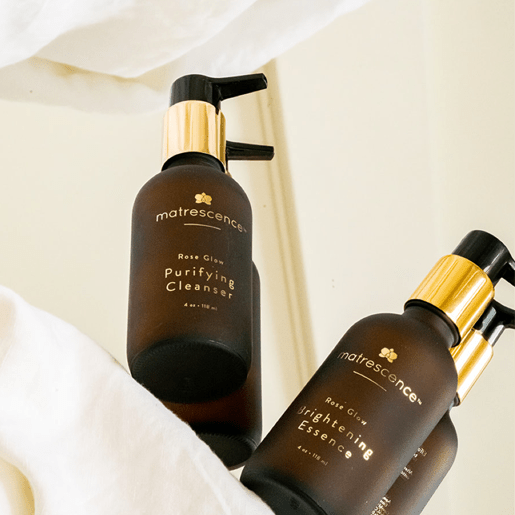
A simple way to support that: mineral-rich, barrier-friendly ingredients that replenish instead of irritate. Bladderwrack Algae (featured in our Brightening Essence) is rich in minerals and polysaccharides that can help skin feel soothed and hydrated—especially when your barrier is stressed.
Translation: you’re giving your skin a calm drink of water, not a harsh reset.
Cortisol (stress hormone) vs. your complexion
New motherhood is beautiful, intense, and many things but “well-rested” usually isn’t one of them.
Sleep disruption + physical recovery can raise cortisol, a stress hormone linked with inflammation. In some people, that can show up as breakouts—often around the jawline and chin—or as general redness and reactivity.
What you might notice
“Postpartum acne” that doesn’t match your old patterns
Redness, stinging, or skin that suddenly hates everything
A compromised barrier (products that used to work now burn)
What helps
This is not the moment for aggressive peels, heavy acids, or “let me exfoliate my way out of this.” Your skin barrier is already vulnerable.
Instead, choose soothing, support-based ingredients like Gotu Kola and calming mushroom extracts to help reduce visible irritation and support the skin’s recovery response—without triggering more inflammation.

Lingering melasma: the “mask of pregnancy” that sticks around
If dark patches or spots appeared during pregnancy, you’re not imagining it—and you’re not doing anything wrong if they don’t vanish right away.
Hormonal shifts can sensitize pigment-producing cells, and melasma can take time to fade—especially if you’re not sleeping much (again) and you’re getting incidental sun exposure during walks, errands, or stroller life.
What helps
Skip harsh bleaching agents—especially if you’re breastfeeding or your skin is reactive.
Look for gentle brightening support instead. Ingredients like Shiitake and Lingzhi mushroom (in Rose Glow Brilliance Protection Soufflé) can help support a more even-looking tone while still being kind to a stressed postpartum barrier.
Key point: postpartum brightening should be gradual, consistent, and non-irritating.
Your 4th Trimester Skin Ritual: 3 Minutes, Barrier-First
You don’t need a 10-step routine. You need something realistic—something that works even when you’re running on caffeine and vibes.
Here’s a simple, postpartum-friendly ritual built around recovery:
Step 1: Gently resurface (in the shower)
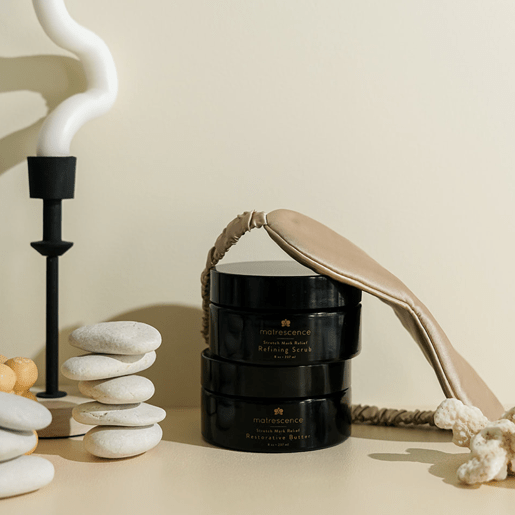
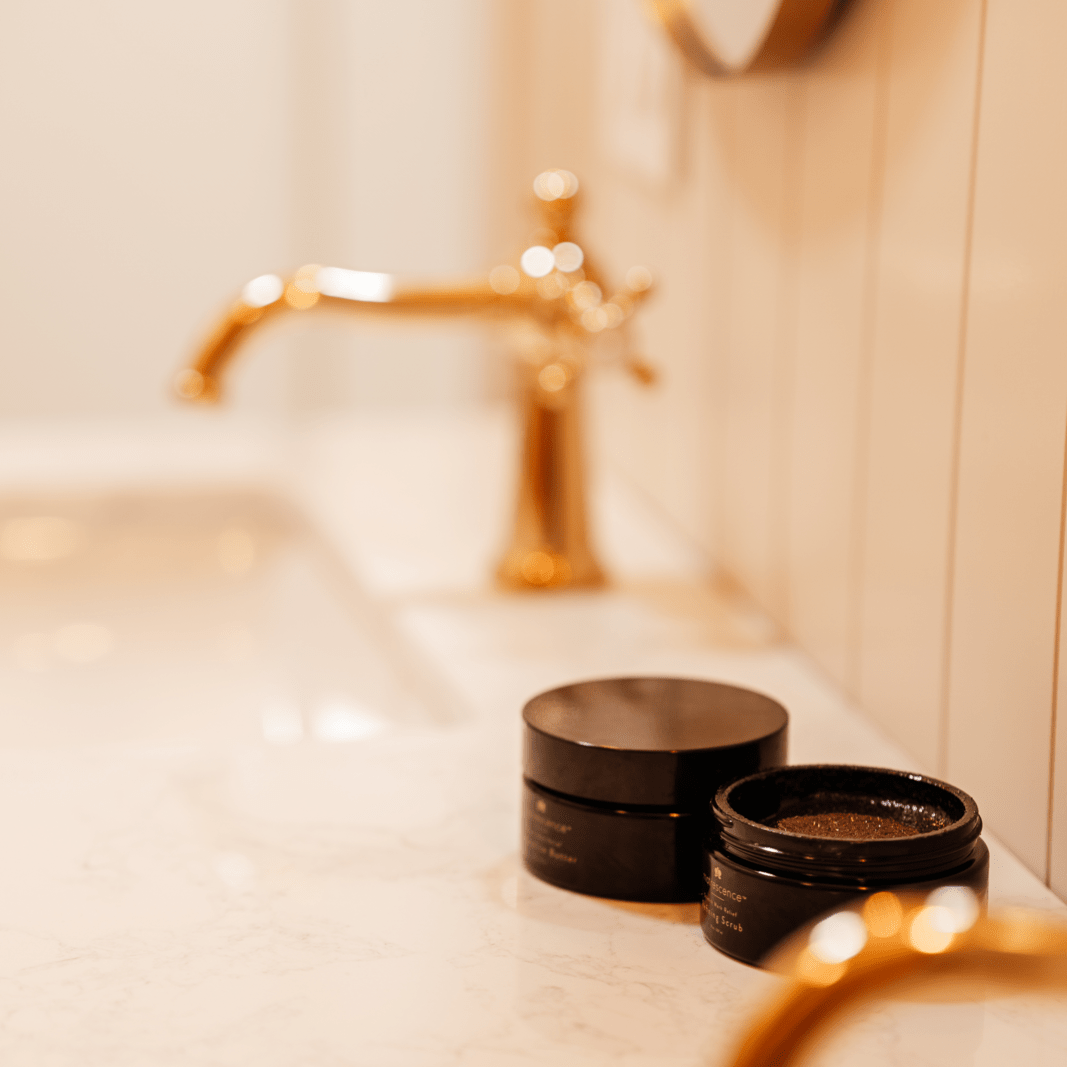
Use Refining Body Scrub to smooth dry, “crash” texture and help circulation—without overdoing it.
Rule of thumb: if your skin is stinging or raw, pause exfoliation and focus on calming + hydration first.
Step 2: Rehydrate + rebalance
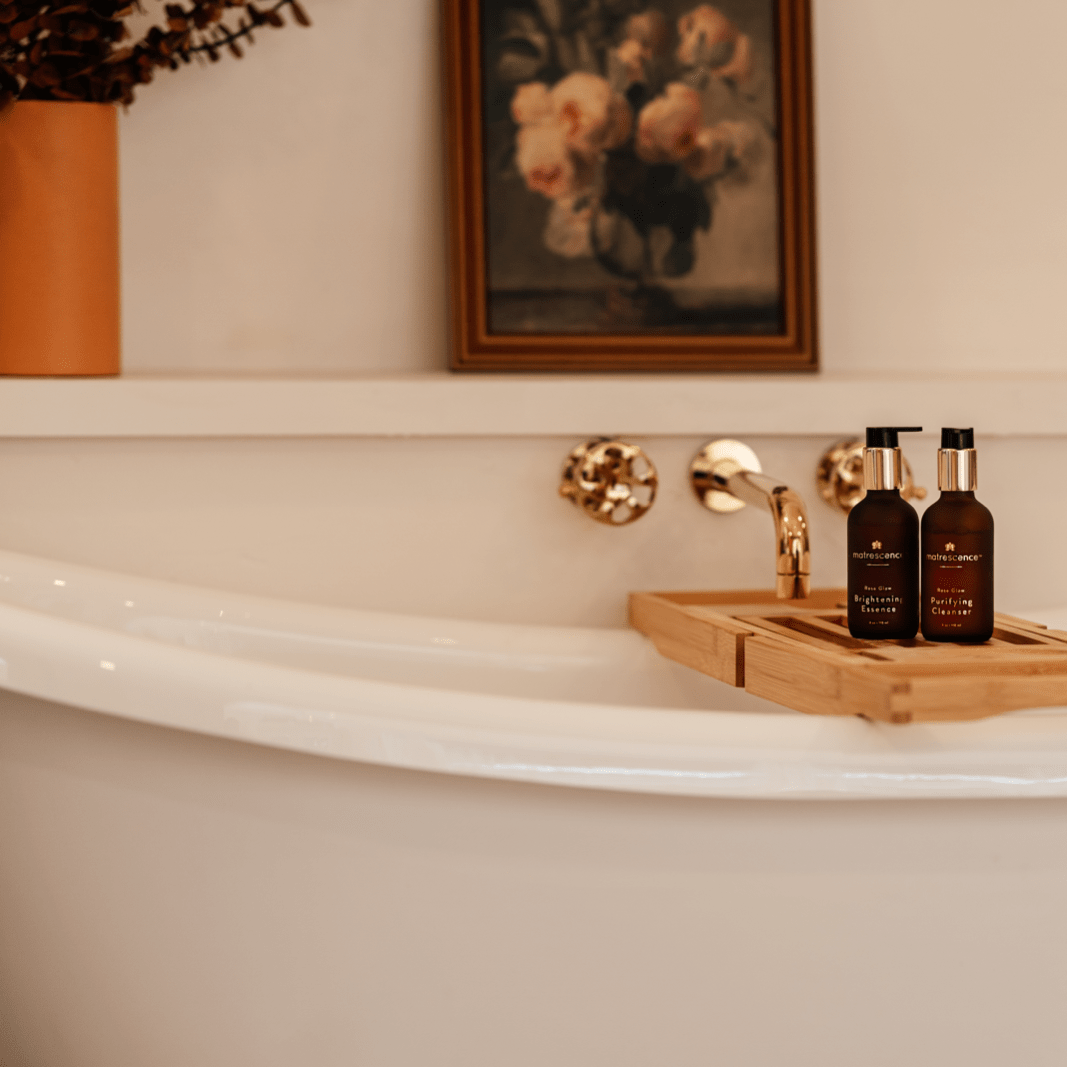
Mist or pat on the Brightening Essence. This is your “reset” step—supporting hydration and the feel of your barrier with mineral-rich botanicals like Bladderwrack Algae.
Step 3: Seal the barrier (and support elasticity)
Apply the Restorative Butter. Even after pregnancy, skin is still adapting. Gotu Kola is a powerhouse botanical for supporting the look of resilience and comfort as your body transitions.
Mothering the Mother (Because You’re Healing Too)
The 4th trimester is not a “bounce back” phase—it’s a recovery phase.
Your skin isn’t being “dramatic.” It’s responding to hormonal shifts, stress physiology, and real physical healing. Caring for it isn’t vanity, it’s barrier support. It’s comfort. It’s one small way to take care of the person taking care of everyone else.
the guide
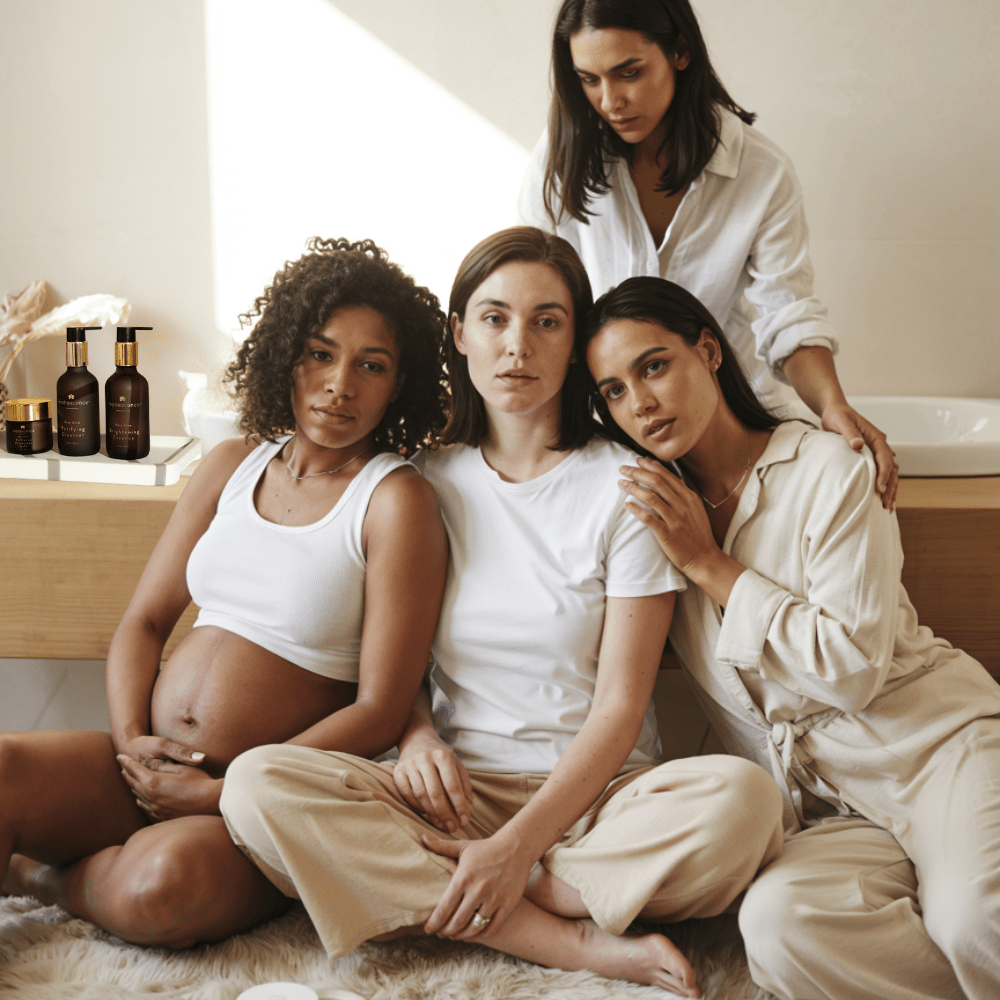
From PCOS to perimenopause, hormonal shifts happen at every life stage. Learn why hormone-safe skincare is a must—even if you’re not expecting.
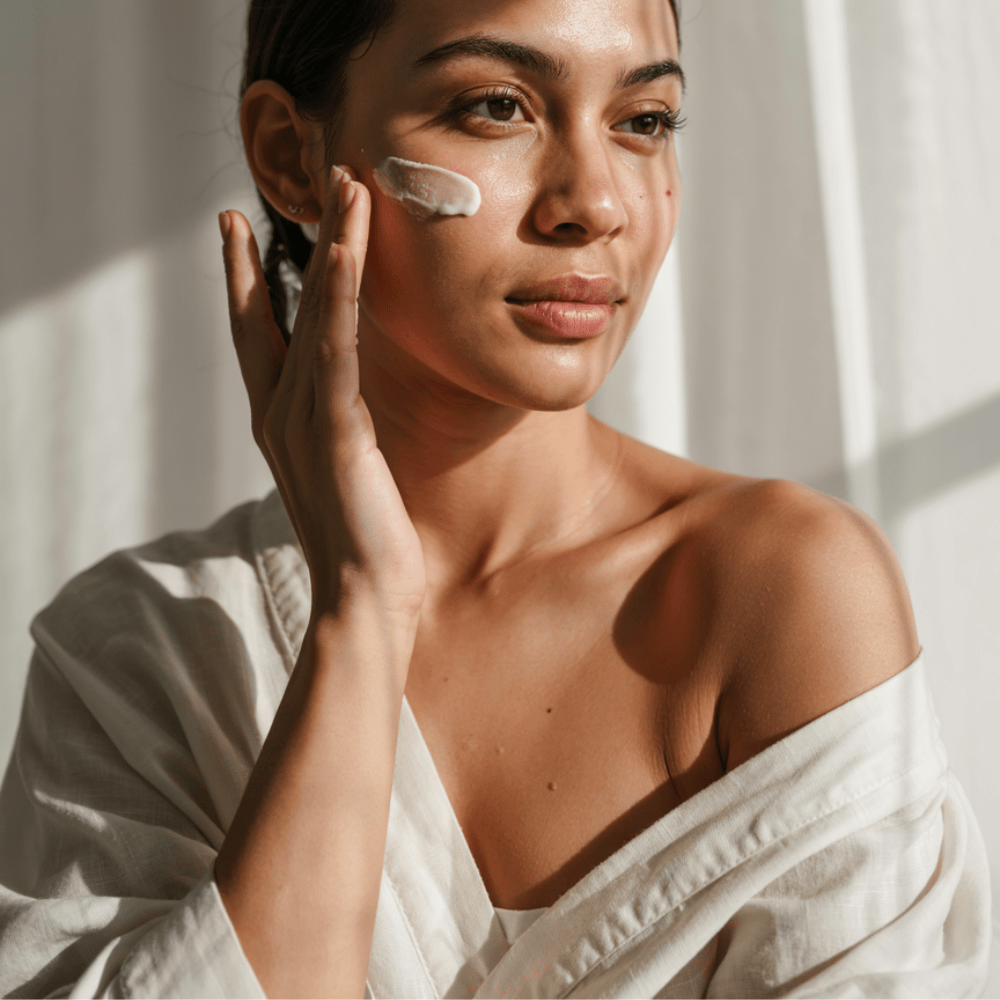
Whether you’re pregnant, postpartum, or perimenopausal, choosing the right ingredients makes all the difference. In this guide, we explain why endocrine disruptors matter, spotlight clean actives a...
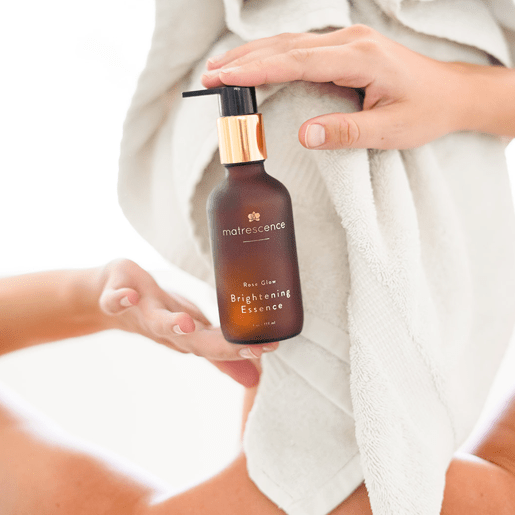
A deep-dive of our Brightening Essence. A dual-action toner and serum that gently exfoliates and hydrates to reveal a vibrant, more even complexion. Formulated for hormonally shifting skin, it help...
Leave a comment
All comments are moderated before being published.
This site is protected by hCaptcha and the hCaptcha Privacy Policy and Terms of Service apply.