



Stretch marks and hormonal skin changes: why your skin needs extra care
Pregnancy and postpartum change your skin in ways you can see and ways you can't. Stretch marks are the obvious one: they form when skin stretches faster than its collagen and elastin fibers can keep up. Underneath, shifting hormones are doing a lot of the work too. Understanding what's going on helps you pick a hormone-safe ritual that keeps skin comfortable, supple and smoother-looking.
What hormones are doing to your skin

You didn't sign up for this, but here's the cast:
- Cortisol: higher cortisol can weaken collagen and elastin, the fibers that let skin stretch and snap back. Skin stretches less easily and marks show up sooner.
- Estrogen: in pregnancy, estrogen can leave skin plump and hydrated. After birth it drops, and skin gets drier and loses water faster.
- Progesterone: it revs up oil glands, which can mean body breakouts or rough texture in sensitive areas.
The upshot: your usual products may stop working, and quick fixes won't cut it.
Why a basic lotion isn't enough
Skin that's stretching, shrinking and recovering on repeat needs more than basic upkeep:
- Suppleness: look for butters and plant ingredients like Centella asiatica that keep skin soft and flexible, rather than generic lotion.
- Moisture that stays: light lotions evaporate fast. Rich butters and oils hold hydration in.

- Calm: itching often comes with stretching skin and a stressed barrier. Soothing ingredients make it easier not to scratch. If the itch is intense, comes with a rash, or is worst on your palms and the soles of your feet, call your OB/GYN, since conditions like PUPPP and cholestasis need a doctor.
- Smoothness: gentle exfoliation clears dry, dead skin so what you put on next sinks in better.
A three-step ritual for stretching skin
1. Exfoliate gently (2 to 3 times a week)
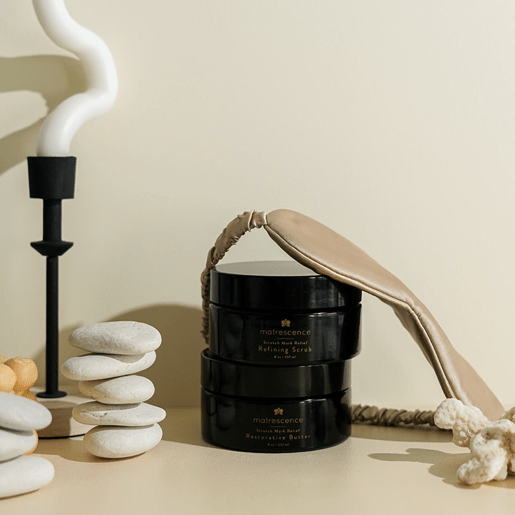
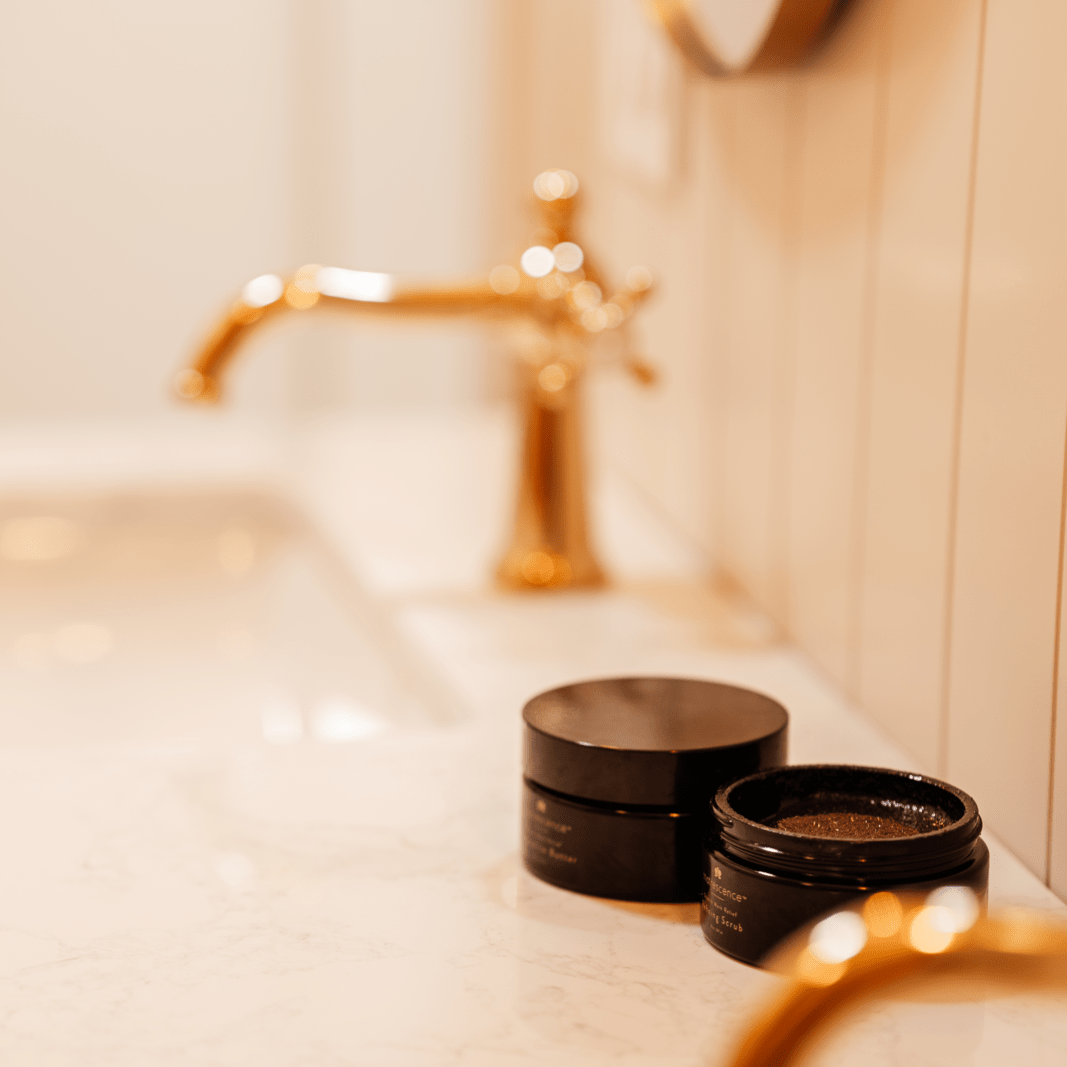
Use a sugar-based scrub. Salt scrubs can be scratchy on skin that's already stretched thin. The Refining Scrub buffs away dry skin and leaves it smooth and ready for the next step.

The Refining Scrub. Why we love it: the sugar crystals dissolve at the right pace while macadamia, almond and avocado oils cushion every pass. No red, raw aftermath. Soft skin.
2. Rich butter for support
After exfoliating, or any time your skin looks thirsty, massage in The Restorative Butter. Shea and cocoa butters plus Centella asiatica deliver fatty acids and plant extracts where you need them most.

The Restorative Butter. Why we love it: it helps reduce the appearance of stretch marks, softens the look of red and purple marks, and soothes itchy skin.
3. Seal it in with oil
Finish with The Hydrating Oil, a light, fast-absorbing body oil. Its omegas and antioxidants lock in moisture and support the skin barrier.

The Hydrating Oil. Why we love it: it calms dry, itchy skin and sinks in fast, so you're not sticking to your clothes.
Do it twice a day
Consistency is what makes the difference. Two to five minutes of massage, morning and night, helps everything absorb and gives you a few minutes to yourself.
Exfoliate, nourish, seal. Simple, repeatable, and hormone-safe whether you're mid-pregnancy or months postpartum.
Get all three steps in The Stretch Mark Relief Trio.
shop the ritual
hormone-safe skincare for every stage. these are the three most moms try first.


the guide
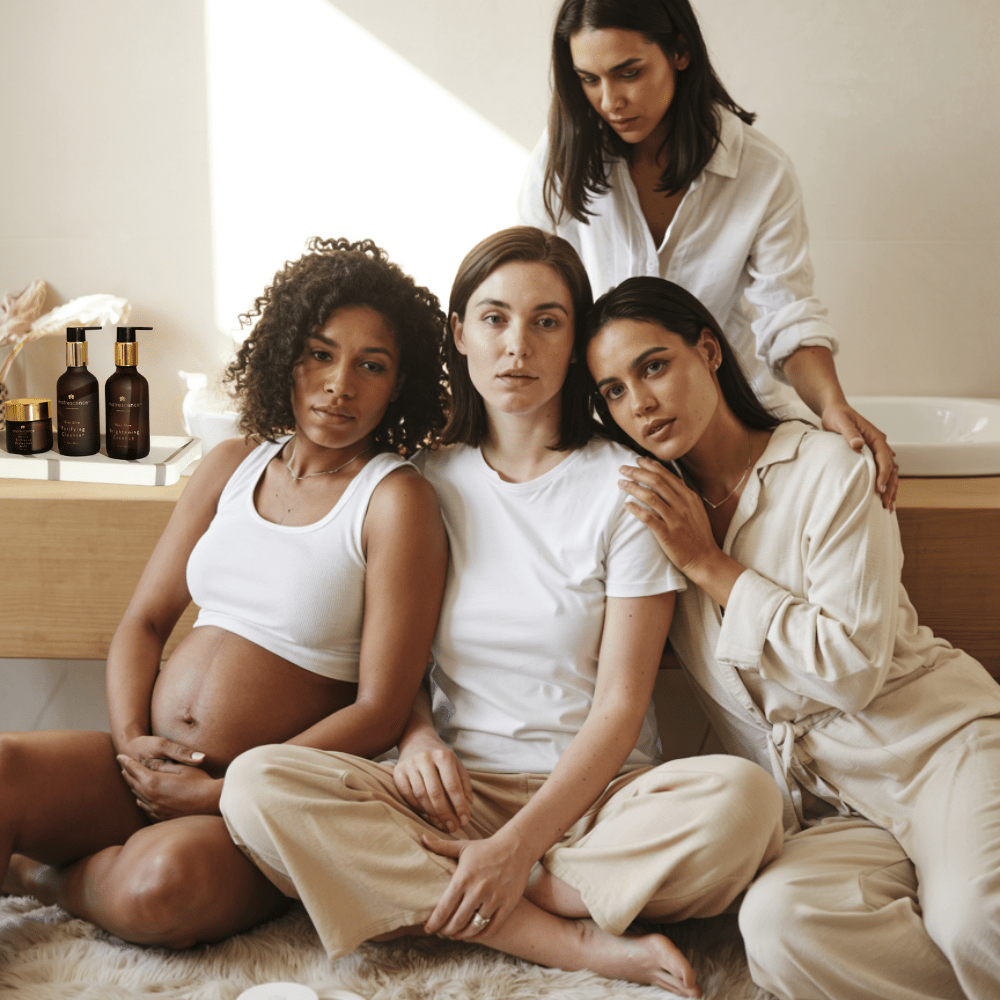
From PCOS to perimenopause, hormonal shifts happen at every life stage. Learn why hormone-safe skincare is a must, even if you’re not expecting.
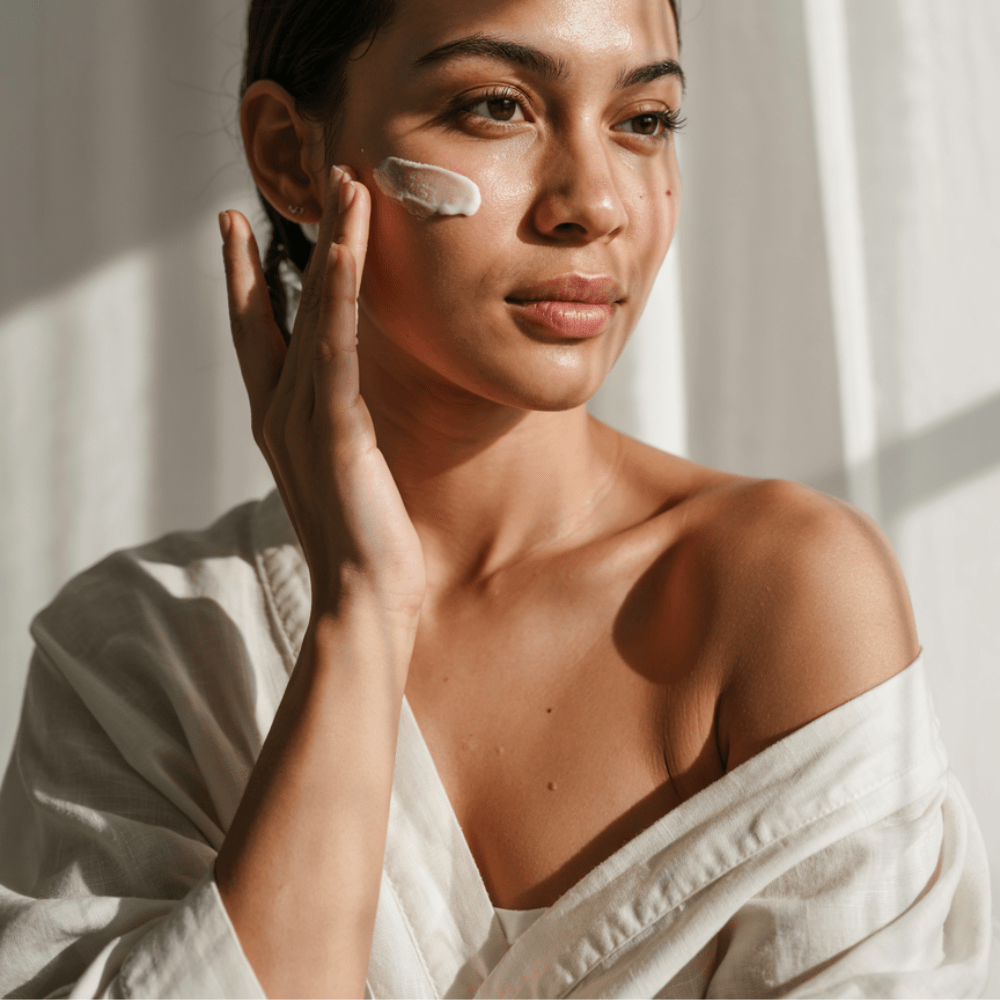
Whether you’re pregnant, postpartum, or perimenopausal, choosing the right ingredients makes all the difference. In this guide, we explain why endocrine disruptors matter, spotlight clean actives a...
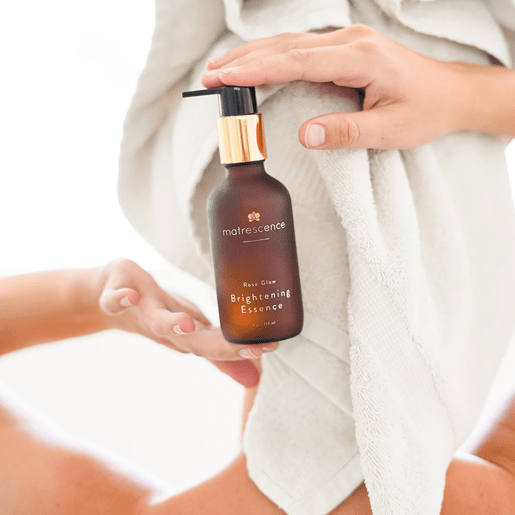
A deep-dive of our Brightening Essence. A dual-action toner and serum that gently exfoliates and hydrates to reveal a vibrant, more even complexion. Formulated for hormonally shifting skin, it help...
Leave a comment
All comments are moderated before being published.
This site is protected by hCaptcha and the hCaptcha Privacy Policy and Terms of Service apply.