




If you’re in the second trimester and your belly suddenly feels itchy in a way that borders on personal, you’re not imagining it—and you’re definitely not alone.
For a lot of people, trimester 2 is the “I have energy again” era and also the “why does my belly feel like it’s trying to shed its own skin?” era.
The good news: most pregnancy itching is normal. The important part is knowing what’s typical, what’s not, and how to calm your skin without throwing your barrier into chaos
Your skin is stretching faster than it can adapt
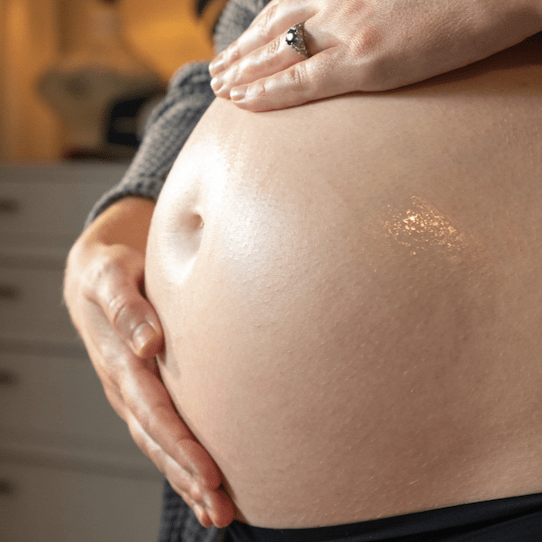
Trimester 2 is often when your bump goes from “maybe” to “oh, there’s a baby in there.”
As skin stretches, the outer layer (your skin barrier) can develop tiny micro-tears and lose moisture more quickly. When your barrier is stressed, nerve endings get more reactive—and itching ramps up.
What it can feel like
Tightness, itchiness, or a “prickly” sensation
Itch that’s worse at night
Dry patches or a slightly rough texture
Hormones can make your skin extra reactive
Pregnancy hormones don’t just affect mood and appetite—they affect your skin’s oil production, inflammation response, and sensitivity.
So even if you’ve never had sensitive skin in your life, trimester 2 can change the rules.
Translation: products you used pre-pregnancy might suddenly sting, and your skin may react to fragrance, harsh surfactants, or overly strong actives.
Dryness + heat + friction = the perfect itch storm
In pregnancy, your body runs warmer, your blood volume increases, and you may sweat more. Add fabric rubbing on stretched skin (hello leggings, waistbands, and bra bands), and you get friction irritation—especially under the bump and along the sides.
Sometimes, itching is a sign to call your provider
Most belly itching is just stretching + dryness. But there are a few situations where itching deserves a check-in—because pregnancy can come with conditions that need medical attention.
Call your OB/midwife promptly if you notice:
Sudden severe itching, dark urine, pale stools, or yellowing of skin
A widespread rash with significant itching
Itching paired with swelling, hives, or trouble breathing
Not to scare you—just to keep you safe. Most of the time, it’s dryness. But you deserve clarity.
How to calm the itch without irritating your skin more
Step 1: Treat your belly like a compromised barrier (because it is)
When skin is stretched and itchy, think: repair and protect.
Use lukewarm showers (hot water = more dryness)
Keep cleansers gentle and fragrance-free
Pat skin dry instead of rubbing
Step 2: Moisturize like it’s your job (and layer it)
The itch is often a hydration problem + barrier problem. The fastest relief usually comes from locking in moisture consistently.
What to look for
Rich emollients + barrier-supporting botanicals
Ingredients that support comfort and elasticity (like Gotu Kola)
Minimal irritants (no harsh essential oil overload, no aggressive actives)
A belly-focused ritual is ideal because it’s designed to stay put and create a protective layer—especially helpful at night when itching tends to spike.
Step 3: Make it a twice-daily micro-ritual (yes, even if it’s 60 seconds)
Consistency beats intensity.
Morning: quick layer after shower
Night: thicker layer + slow massage (helps circulation + signals your nervous system to calm)
Step 4: Use a “cool-down” hack when the itch flares
When the itch is loud, give your skin a gentle nervous-system reset:
Cool compress for 1–2 minutes
Store your moisturizer in the fridge
Wear breathable, loose cotton to reduce friction

A simple pregnancy belly ritual (that actually works)
1) After shower: apply Belly Butter to slightly damp skin to seal in water.
2) Midday (optional): add a quick top-up if you feel tightness.
3) Before bed: apply a thicker layer and do a 30-second slow massage—sides, under-bump, and hips.
That’s it. No complicated routine. Just barrier support on repeat.
The bottom line
Trimester 2 belly itch is usually your skin doing the most to keep up with rapid stretching, hormone shifts, and dryness. You don’t need to “tough it out.” You need barrier support, hydration, and gentle consistency.
And if the itch feels intense, spreads, or comes without a rash—especially on your hands and feet—loop in your provider.
Your skin isn’t being dramatic. It’s communicating.
You’re allowed to listen.

Leave a comment
All comments are moderated before being published.
This site is protected by hCaptcha and the hCaptcha Privacy Policy and Terms of Service apply.